Low Mass - Thursday, March 1st, 2012
Unknown artist (c. 1440)
Samuel H. Kress Collection
On display in the Allentown Art Museum
St. Martin of Tours was chosen by
St. Stephen of Hungary to be his Patron Saint

Ancient Rites
 ften referred to affectionately as the Traditional Latin Mass, the Extraordinary Form of the Roman Rite, as it is lived at St. Stephen's, is actually
 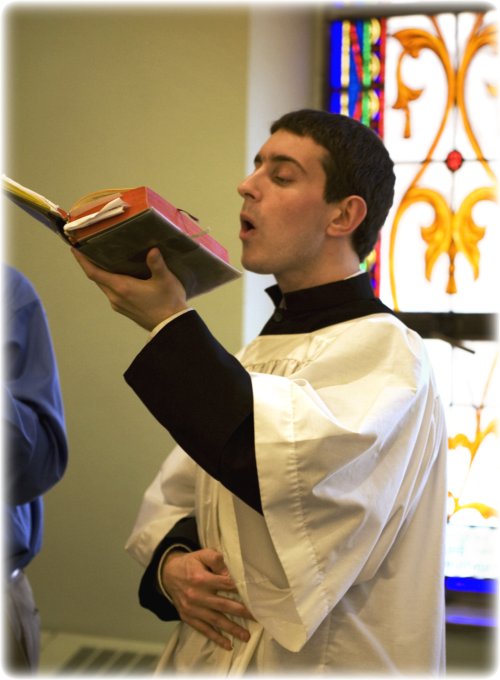 the full Sacramental life with all seven Sacred Sacramental Rites being conducted according to the 1962 Roman Missal, Roman Breviary and Roman Ritual of Blessed Pope John XXIII. Preserved and passed down to us through the ages by the Saints of old and the Church Fathers of late antiquity, embodied within the Extraordinary Form is the Holy Tradition of Mother Church.
In 2006 the Diocese of Allentown, in consultation with Rev. William N. Seifert, established Saint Stephen of Hungary Parish as the Diocesan site for the celebration of the Extraordinary Form of the Roman Rite. On Sunday, October 8th of that same year the Traditional Latin Mass was offered at St. Stephen's for the first time in over 30 years. Seven years later, St. Stephen's is privileged to carry on this Holy Apostolate for our Diocese.
The Extraordinary Form, in the words of the men who made it possible.
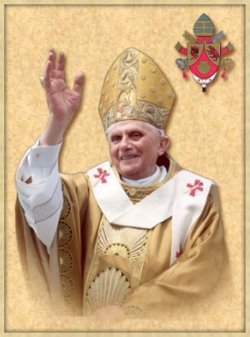 The following is taken from the Apostolic Letter Summorum Pontificum issued Motu Proprio at Rome, St. Peter's Basilica, on Saturday, July 7th, 2007 by His Holiness Pope Benedict XVI:
In some regions, no small numbers of faithful continue to adhere with great love and affection to the earlier liturgical forms. These had so deeply marked their culture and their spirit that in 1984 the Supreme Pontiff John Paul II, moved by a concern for the pastoral care of these faithful, with the special indult Quattuor Abhinc Anno, issued by the Congregation for Divine Worship, granted permission to use the Roman Missal published by Blessed John XXIII in the year 1962. Later, in the year 1988, John Paul II with the Apostolic Letter given as Motu Proprio, Ecclesia Dei, exhorted bishops to make generous use of this power in favor of all the faithful who so desired.
Following the insistent prayers of these faithful, long deliberated upon by our predecessor John Paul II, and after having listened to the views of the Cardinal Fathers of the Consistory of 22 March 2006, having reflected deeply upon all aspects of the question, invoked the Holy Spirit and trusting in the help of God, with these Apostolic Letters we establish the following:
Art 1. The Roman Missal promulgated by Paul VI is the ordinary expression of the 'Lex orandi' (Law of prayer) of the Catholic Church of the Latin rite. Nonetheless, the Roman Missal promulgated by St. Pius V and reissued by Bl. John XXIII is to be considered as an extraordinary expression of that same 'Lex orandi,' and must be given due honour for its venerable and ancient usage. These two expressions of the Church's Lex orandi will in no any way lead to a division in the Church's 'Lex credendi' (Law of belief). They are, in fact two usages of the one Roman rite.
The following is taken from the Apostolic Letter Ecclesia Dei of Pope John Paul II issued Motu Proprio at Rome, at St. Peter's Basilica, July 2nd, 1988:
A Commission is instituted whose task it will be to collaborate with the bishops, with the Departments of the Roman Curia and with the circles concerned, for the purpose of facilitating full ecclesial communion of priests, seminarians, religious communities or individuals who may wish to remain united to the Successor Peter in the Catholic Church, while preserving their spiritual and liturgical traditions.
Moreover, respect must everywhere be shown for the feelings of all those who are attached to the Latin liturgical tradition, by a wide and generous application of the directives already issued some time ago by the Apostolic See for the use of the Roman Missal according to the typical edition of 1962.
As this year specially dedicated to the Blessed Virgin is now drawing to a close, I wish to exhort all to join in unceasing prayer that the Vicar of Christ, through the intercession of the Mother of the church, addresses to the Father in the very words of the Son: "That they all may be one!".
